
How does choosing the lowest bid influence the architect's ability to maintain design?
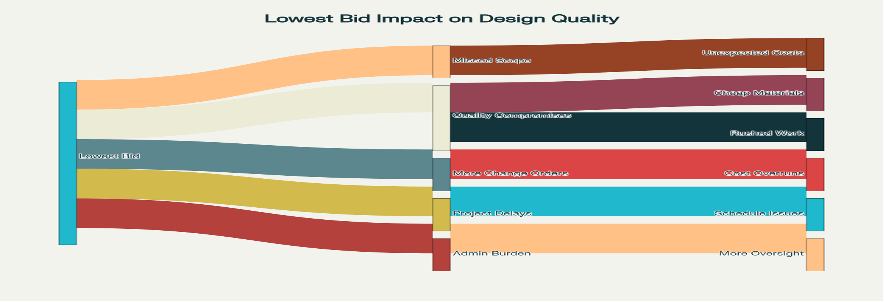
In the competetive world of architecture and construction, choosing the lowest bid is a common practice. However, this approach can significantly impact the architect's ability to maintain design quality for several reasons:
Scope Reduction and Omitted Elements:
Low bids frequently exclude or minimize critical project components, such as engineering details, site conditions, or construction administration. These omissions may not be apparent until construction begins, resulting in a series of change orders and forced compromises that dilute the architect’s original design intent and quality standards.
Compromised Materials and Workmanship:
Contractors who win with the lowest bid may resort to using lower-quality materials or less-skilled labor to keep costs down. This can directly impact the durability, aesthetics, and functionality of the finished project, falling short of the architect’s expectations and specifications.
Adversarial Relationships and Change Orders:
The low-bid process often fosters an adversarial dynamic between the contractor, owner, and architect. Contractors may view change orders as opportunities to recoup lost profits, leading to disputes and further erosion of design quality as the project team is pressured to accept cheaper alternatives or reduced scopes.
Reduced Innovation and Professional Input:
When budgets are squeezed to meet a low bid, architects and engineers may have less time and fewer resources to devote to research, innovation, or thorough design development. This stifles creative solutions and can result in a less resilient, less sustainable, and less distinctive final product.
Misalignment of Expectations:
Even with detailed drawings and specifications, varying interpretations and the drive to minimize costs mean that no two contractors will deliver identical results. The lowest bid often reflects the bare minimum required, not the architect’s full vision or the owner’s expectations.
Long-Term Costs and Quality Risks:
While the lowest bid may seem cost-effective initially, it often results in higher long-term expenses due to increased maintenance, repairs, and potential legal liabilities from design or construction failures. This undermines the architect’s goal of delivering a high-quality, enduring project.
ASPECT OF WORK | EFFECT OF LOWEST BID SELECTION |
Design Quality | Often Reduces (less innovation and detail) |
Material Selection | Lower Quality, Potential Shortcuts |
Project Scope Coverage | Frequent Omissions & Increase of Change Orders |
Project Schedule | Increased Risk of Delays |
Architect’s Role | More Oversight, Less Creative Freedom |
In summary, opting for the lowest bid often forces architects to compromise on design quality, stifles innovation, and increase the risk of disputes and long-term costs. A qualifications-based or value-focused selection process is more likely to preserve the architect’s design intent and deliver a successful project outcome.


Comments